10 Things You Probably Didn’t Know About Kodiang
A small northern town with limestone hills, local legends, paddy fields, community life and stories waiting to be discovered.
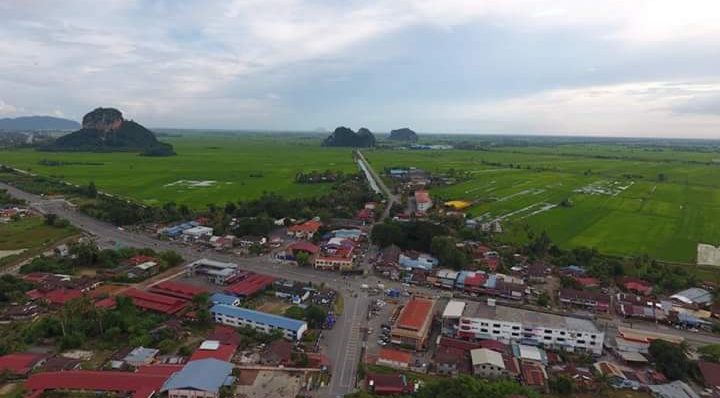
At first glance, Kodiang may seem like a quiet town surrounded by the familiar landscapes of northern Kedah. There are paddy fields, kampung roads, small businesses and the unhurried rhythm of everyday local life.
But look a little closer, and Kodiang begins to reveal a different side of itself.
Behind its peaceful surroundings are ancient limestone formations, local folklore, hiking spots, community landmarks, a railway connection and stories that have been passed from one generation to another.
If you have only ever passed through Kodiang on your way somewhere else, here are 10 things that might make you want to stop, look around and discover more.
1. Kodiang Is Home to Limestone Formations That Are Millions of Years Old
One of the most distinctive features of the Kodiang landscape is its dramatic limestone hills.
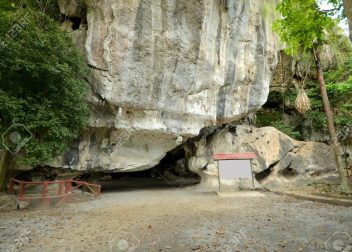
The area around Gua Kerbau is associated with limestone formations believed to date back hundreds of millions of years. The Kedah Tourism Directory describes limestone formations in the Kodiang area as being almost 300 million years old, while previous reporting on Gua Kerbau has similarly highlighted the extraordinary age of the landscape.
These formations give Kodiang a character that is quite different from the wide, flat paddy landscapes commonly associated with Kedah.
So the next time you see those rocky hills rising unexpectedly from the fields, remember: they have been there far longer than the towns, roads and villages surrounding them today.
2. Gua Kerbau Comes With Its Own Local Legend
Kodiang would not be Kodiang without the stories surrounding Gua Kerbau, or Buffalo Cave.
One popular version of the legend connects the cave with Sang Kelembai, a mythical figure said in Malay folklore to possess the power to turn living things into stone.
Local stories tell of a buffalo being transformed into stone, and visitors have long associated a rock formation inside the area with the shape of a reclining buffalo.
Another version suggests that wild buffaloes once sheltered in the cave, contributing to the origin of its name.
Like many old folk stories, there is no need to decide which version is “the correct one”. The real value lies in how these stories become part of a community’s cultural memory.
GO KOKDIANG Tip
When visiting heritage locations, don’t just look at the place. Ask local residents about the stories connected to it. Sometimes the story is as interesting as the attraction itself.
3. Gua Kerbau Is More Than Just a Cave
The significance of Gua Kerbau goes beyond folklore.
According to reporting by Utusan Malaysia, the site has also been associated with geological and Neolithic heritage, adding another layer to its historical value. The Kedah Tourism Directory similarly links the site with historical narratives extending from early settlement to later periods of Kedah’s history.
This makes Gua Kerbau an interesting example of how one location can bring together:
nature + geology + archaeology + folklore + local history.
That combination gives the area considerable potential for educational tourism, heritage interpretation and community-based tourism.
For students, families and curious travellers, it can be more than simply a place to take photographs.
It is a place where a landscape tells several stories at once.
4. Bukit Kodiang Has Another Name — Bukit Mokcun
If hiking is more your style, there is another name worth remembering:
Bukit Mokcun
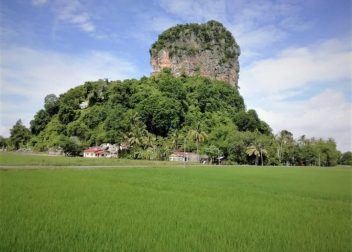
The Majlis Perbandaran Kubang Pasu identifies Bukit Mokcun as Bukit Kodiang, located within the Kodiang area. Interestingly, the hill was previously known as Bukit Hantu before becoming increasingly popular among hikers.
Today, one of its biggest attractions is not simply reaching the top.
It is the view.
From higher ground, hikers can enjoy panoramic views across Kedah’s extensive paddy fields — green during one season, golden during another.
It is exactly the type of scenery that reminds visitors why Kedah is so strongly associated with Malaysia’s rice-growing landscape.
5. The Paddy Fields Are Part of the Experience
Sometimes we become so familiar with our own surroundings that we stop seeing them as something special.
For local residents, a paddy field may simply be part of the daily landscape.
For a visitor, however, an endless field stretching toward distant limestone hills can be one of the most memorable sights of northern Malaysia.
This is particularly evident around Bukit Kodiang, where the local authority itself highlights the sweeping panorama of Kedah’s paddy landscape visible from the hill.
And this is something GO KOKDIANG wants to celebrate:
Not every attraction needs a ticket counter.
Sometimes an ordinary local landscape can become an extraordinary visitor experience when we learn how to appreciate and present it.
6. You Can Reach Kodiang by Train
Here’s something useful if you are planning a visit without driving.
Kodiang has its own railway station.
KTMB officially lists Kodiang Station among its stations in Kedah, providing Kodiang with a direct connection to Malaysia’s rail network.
That gives the town an interesting advantage as a potential local tourism destination.
Imagine a simple future itinerary:
Arrive by train → explore Kodiang → eat local food → visit nearby attractions → return by train.
For younger travellers, students and visitors who prefer public transport, rail connectivity can make a local destination considerably easier to explore.
Travel note: Train services and schedules may change, so always check the latest KTMB timetable before travelling.
7. The Local Market Is Part of Kodiang’s Community Life
To understand a place, sometimes you should visit its market instead of only its tourist attractions.
Pasar Awam Kodiang continues to function as an important local commercial space.
In July 2025, Majlis Perbandaran Kubang Pasu conducted an official visit to review the market’s cleanliness, waste management, drainage, public facilities and infrastructure, reflecting its continuing role as a working community space.
Local authority records have also identified business spaces associated with Pasar Kodiang, Medan Selera Kodiang and local stalls, showing how small traders form part of Kodiang’s local economic ecosystem.
For GO KOKDIANG, places like these matter.
Because discovering Kodiang shouldn’t only mean discovering scenery.
It should also mean discovering the people who make a living here.
8. Kodiang Has a Community Landmark With a Story of Its Own
Another important landmark is Masjid Sultan Sallehuddin at Kampung Paya Stesen, Kodiang.
The mosque was officially inaugurated by the Sultan of Kedah in February 2019. The present building replaced the earlier Masjid Al Muhammadiah and was completed in 2016.
According to Bernama, the mosque was built with contributions from the public and can accommodate approximately 1,000 worshippers.
Beyond architecture, landmarks like this tell us something important about a place.
A town is not defined only by attractions.
It is also shaped by the spaces where people meet, worship, trade, celebrate and live their everyday lives.
9. Local Residents Have Helped Preserve Gua Kerbau
One of the strongest ingredients in sustainable local tourism is community participation.
And there is already evidence of this in Kodiang.
In July 2022, residents living around Gua Kerbau joined local agencies and representatives of the local authority in a gotong-royong programme to clean the Gua Kerbau area.
It may sound like a simple activity, but it represents something bigger.
Tourism works best when the local community is not treated merely as part of the scenery.
Residents should be part of:
- preserving the destination,
- telling its stories,
- benefiting from tourism,
- operating local businesses,
- and deciding how their community is represented.
That’s the kind of local tourism ecosystem worth building.
10. Kodiang Has More Potential Than Many People Realise
Perhaps the most interesting thing about Kodiang is that its attractions are not concentrated into one huge commercial tourism complex.
They are scattered across the landscape and woven into everyday life.
There is:
Nature.
Bukit Kodiang and the limestone landscape.
Heritage.
Gua Kerbau and its historical associations.
Stories.
Sang Kelembai and local folklore.
Scenery.
The surrounding paddy fields.
Accessibility.
Kodiang railway station.
Community.
Markets, places of worship and kampung life.
Entrepreneurship.
Food operators, traders, service providers and other small local businesses.
In other words, Kodiang already has many of the ingredients needed for an interesting local visitor experience.
The challenge is simply making those experiences easier to find, understand and explore.
And that’s exactly where GO KOKDIANG comes in.
So, Why GO KOKDIANG?
GO KOKDIANG is being developed as a digital directory for people who want to discover what Kodiang has to offer.
Whether you’re searching for somewhere to eat, an interesting place to visit, a local facility, accommodation or simply a story about the area, the aim is to bring those discoveries together in one place.
More importantly, the platform is also about giving greater digital visibility to the people behind Kodiang — its businesses, communities and local stories.
Because sometimes the places worth discovering aren’t necessarily the ones appearing first on everyone’s travel list.
Sometimes they are just a little closer to home.
Discover Local. Experience Kokdiang.
GO KOKDIANG